100 % FREE OF CHARGE FOR YOU! REPORT A CLAIM!

Plant-my-Tree – one tree for every appraisal
Home
About us
Services
Leasing
Fleet management
Glossary
Regions
Contact Guides Call now
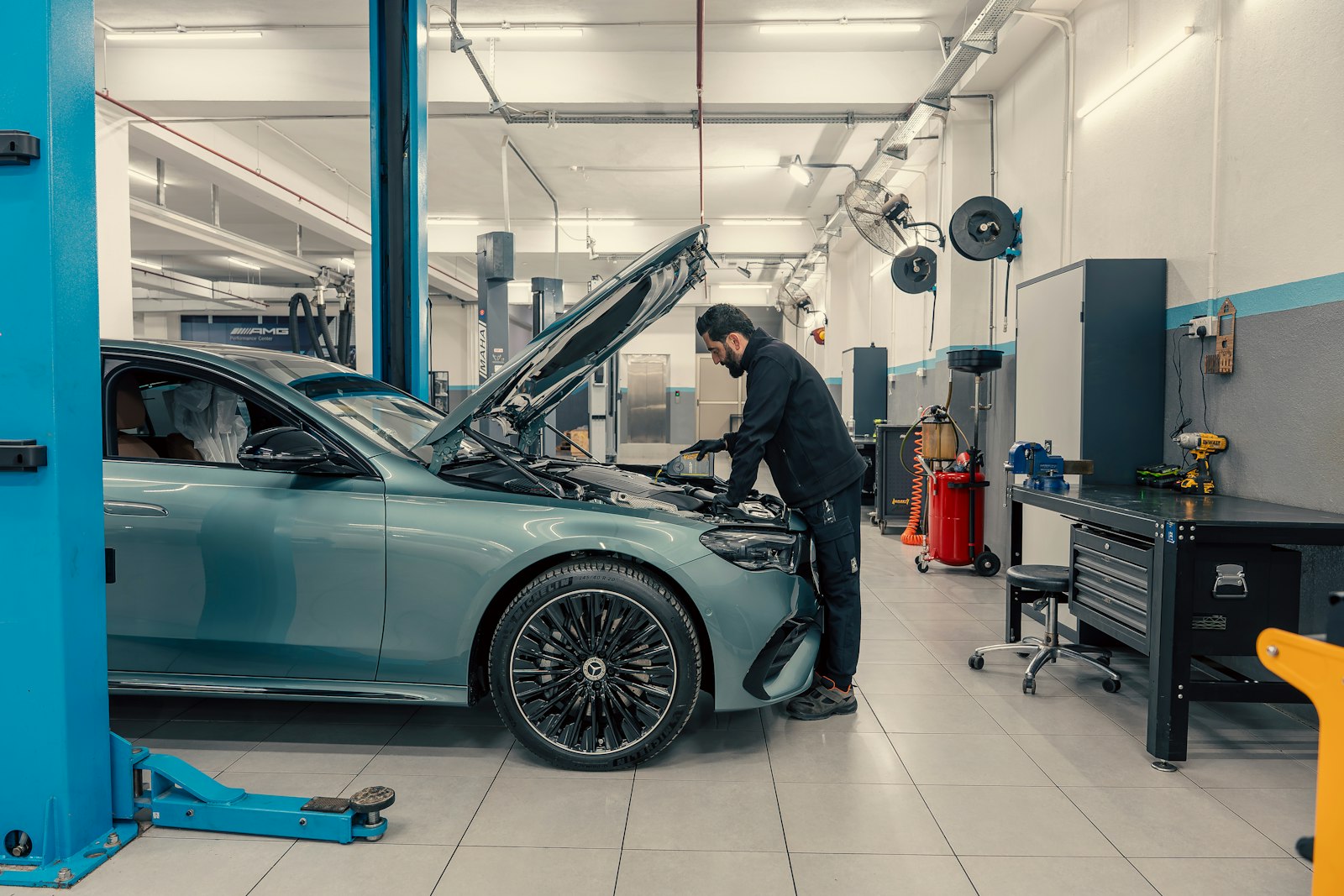
A consultation – an image for the bundled FAQ overview
Home / Frequently asked questions
Frequently asked questions

All answers in one place.

137 questions from every part of our services – from accident appraisals to fleet management and the external transport manager. Every answer links to the matching service page for more detail.

Services

Services questions.

What does the accident appraisal cost me?
If the collision was not your fault: nothing. The appraisal fee forms part of your claim for damages and is borne by the other party's motor liability insurer. We invoice the insurer directly. More on Accident appraisal →
Do I have to use the insurer's appraiser?
No. As the injured party you have the right to an independent appraiser of your own choosing. The insurer's appraiser works in the insurer's interest – your own appraiser works for you. More on Accident appraisal →
From what level of damage is a full report worthwhile?
From roughly €1,000 of damage – above what German practice calls the Bagatellgrenze, the minor damage threshold – you are entitled to a full appraisal report. For smaller damage we prepare a repair estimate instead. If you are unsure, we check it for you free of charge. More on Accident appraisal →
How quickly do I receive my report?
As a rule within 24 hours of the inspection – as an express report by e-mail, and in printed form as well if you would like one. More on Accident appraisal →
What does a vehicle valuation cost?
The fee depends on the type of vehicle and the scope of the report. Give us a short call – you receive a clear fixed price in advance, with no hidden extras. More on Vehicle valuation →
How does the valuation work?
We inspect your vehicle on site or at our office, examine its condition, history and specification, and then produce a written valuation report with photographic documentation – usually within 24 to 48 hours. More on Vehicle valuation →
Is the valuation report accepted everywhere?
Yes. As independent appraisers we produce neutral reports that are accepted by insurers, banks, leasing companies, buyers and courts. More on Vehicle valuation →
Do you also value electric cars?
Yes. With electric vehicles the condition of the traction battery in particular – its state of health – feeds into the valuation, and it is a decisive factor in the real market value. More on Vehicle valuation →
When is diminished value paid out?
In principle whenever your vehicle was damaged through no fault of your own and, despite the repair, loses value on the market as a result. Vehicle age, mileage and the extent of the damage are among the deciding factors – we check your entitlement free of charge. More on Diminished value & total loss →
The insurer has set a high residual value – do I have to accept it?
Not without it being checked. Inflated residual values taken from online salvage exchanges reduce your compensation. As the injured party you may in principle rely on the residual value in your own report – and we set that figure realistically. More on Diminished value & total loss →
What exactly does the 130 per cent rule mean?
You may have your vehicle repaired even in the case of an economic total loss, provided the repair costs come to no more than 130 per cent of the replacement value, the repair is carried out properly in line with the report, and you keep using the vehicle for at least six months. More on Diminished value & total loss →
Does the calculation cost me anything?
Where the collision was not your fault, no – diminished value and the total loss assessment form part of your accident appraisal, which the other party's insurer pays for. More on Diminished value & total loss →
What is a state-of-health analysis and why do I need one?
SoH stands for state of health – the condition of the high-voltage battery. The analysis shows how much usable capacity actually remains. That is decisive for the value of the vehicle, because the battery is the single most expensive component in an electric car. Without a robust SoH figure, neither a residual value nor a diminished value can be properly reasoned. More on EV appraisal →
My electric car looks undamaged after the collision – is a report worth it?
Particularly then. On almost every electric vehicle the battery sits in the floor pan. Even a light rear-end impact or grounding can damage the protection tray or the cell modules without anything being visible from outside. Damage of that kind often only shows up months later – and by then the link to the collision is barely provable. More on EV appraisal →
Do you assess all makes?
Yes, independently of the manufacturer – Tesla, BMW, VW, Mercedes, Audi, Hyundai, Kia, Polestar, Porsche, Renault and others. We are tied to no workshop and no manufacturer. More on EV appraisal →
Who pays for the report after a collision involving an electric car?
Where the collision was not your fault, the other party's liability insurer bears the cost under § 249 of the German Civil Code – exactly as with any other vehicle. For shared fault, comprehensive-insurance claims and pure valuation reports we invoice an agreed fee arranged in advance. More on EV appraisal →
What happens to the battery warranty after a collision?
Manufacturer warranties on the high-voltage battery are usually tied to conditions such as documented servicing and an undamaged structure. A collision can put claims at risk. We document the condition before and after the damage, so that you can evidence to the manufacturer and the insurer what was actually the case. More on EV appraisal →
Is inspecting a high-voltage vehicle dangerous?
Not for you – and for us only safe where the necessary qualification is held. We are certified for work on high-voltage vehicles and observe the prescribed safety distances and isolation procedures. You should not move a damaged electric vehicle yourself, and you should not park it in an enclosed garage. More on EV appraisal →
Does your report replace the Porsche Approved inspection?
No, it complements it. The Approved inspection is a technical sign-off by the selling Porsche Centre. Our condition report is a neutral assessment of condition and value – produced for the buyer or the seller, not for the dealer. More on Porsche Approved →
Can I bring you along to view a car at the dealership?
Yes, and that is the most common arrangement. We inspect the vehicle on site at the dealership. The appointment should be agreed with the seller beforehand – reputable dealers have no difficulty with it. More on Porsche Approved →
Which Porsche models do you produce reports for?
All of them: 911, 718 Boxster and Cayman, Macan, Cayenne, Panamera and Taycan – combustion, hybrid and fully electric. Classics are handled separately under Porsche Classic. More on Porsche Approved →
What does a condition report cost?
Where the collision was not your fault, the other party's insurer covers the cost in full. For pre-purchase advice or a valuation report we quote a fixed price in advance, depending on the model and the scope of the inspection. More on Porsche Approved →
How often does a valuation report need renewing?
Most classic car insurers ask for an updated report every three to five years. Where market values are rising sharply – as they recently have on air-cooled 911s – an earlier update can be sensible, so that you are not underinsured if you have to claim. More on Porsche Classic →
What is the difference between market value and replacement value?
The market value is the price you would realistically achieve on a sale. The replacement value is the amount you would have to spend to acquire an equivalent vehicle from a dealer – it is normally higher and it is the figure that matters for insurance. More on Porsche Classic →
Do you also value restored or modified vehicles?
Yes. On a restoration we assess the quality of the work and the degree of originality; on a modified car, the effect the modifications have on value. Either can raise or lower the value – what decides it is the execution and the documentation. More on Porsche Classic →
Will you come along to a purchase?
Yes. On classics a pre-purchase inspection is particularly worthwhile, because hidden corrosion or a poorly executed restoration can quickly produce five-figure consequential costs. We travel beyond the region for this on request. More on Porsche Classic →
Does the insurer pay for the appraisal here too?
Where the collision was not your fault, yes – the other party's liability insurer bears the cost regardless of what the vehicle is worth. It forms part of your claim for damages under § 249 of the German Civil Code. More on Supercars →
The insurer is directing me to an independent workshop.
On vehicles with a manufacturer's warranty, an unbroken main dealer history or unusual construction methods, such a referral is regularly inadmissible under German case law. In the report we set out why only the marque-appointed specialist workshop can be considered. More on Supercars →
How large is the diminished value typically?
That depends on the model, the age, the mileage and the extent of the damage. On collector vehicles and limited editions it lies well above the figures produced by the usual calculation methods – which is why we reason it individually rather than applying a flat rate. More on Supercars →
Do you also produce valuation reports where there is no damage?
Yes – for insurance, a sale, finance or the division of assets, for example. For collections we can assess several vehicles in a single appointment on request. More on Supercars →
Why does the moisture measurement matter so much?
Because moisture in the body is by far the most value-destroying form of damage on a motorhome – and it stays invisible for a long time. A saturated sandwich body can halve the value of the vehicle even though nothing is visible from outside. More on Motorhomes & caravans →
I want to buy a used motorhome – is a report worth it?
In the overwhelming majority of cases, yes. The cost of the inspection bears no relation to the cost of a saturated or badly repaired body, which quickly runs into five figures. More on Motorhomes & caravans →
Does the insurer cover the appraisal fee?
Where the collision was not your fault, yes, in full. On comprehensive-insurance claims such as hail it depends on the insurer – we clarify that for you in advance. For pre-purchase advice and valuation reports we quote a fixed price beforehand. More on Motorhomes & caravans →
Will you come to a campsite or to winter storage?
Yes. We inspect wherever the vehicle is standing – within the Rottweil area at no surcharge, and further afield by arrangement. More on Motorhomes & caravans →
Who pays for a truck appraisal after an accident?
If you are the injured party – the other driver caused the collision – the other party's liability insurer pays for the report. In that case you normally bear no costs of your own. More on Trucks & commercial vehicles →
How long does a truck appraisal take?
The on-site inspection takes one to three hours depending on the extent of the damage. The finished, legally sound report is normally available within 24 hours, so your vehicle can go in for repair as quickly as possible. More on Trucks & commercial vehicles →
Do you also come to businesses and haulage companies?
Yes, of course. We come directly to your premises, to the workshop or to the scene of the accident in the district of Rottweil and the surrounding area. Simply arrange an appointment – short notice is fine. More on Trucks & commercial vehicles →
How is loss of use calculated?
Loss of use is based on the cost of a comparable hire vehicle or on the loss actually incurred. We document this using current hire rate tables and your actual operating situation, in a form that stands up in court. More on Trucks & commercial vehicles →
What is the difference between a total loss and an economic total loss on a truck?
A technical total loss exists where repair is not possible. An economic total loss exists where the repair costs exceed the replacement value less the residual value. On commercial vehicles these thresholds often sit differently than on cars. More on Trucks & commercial vehicles →
Do I really need a report for an e-bike?
For accident damage from around €750 in repair costs a report is worthwhile – and where the collision was not your fault it costs you nothing. It secures every element: repair costs, diminished value and loss of use. Without a report, insurers cut claims in our experience. More on E-bikes & e-scooters →
Can battery damage be assessed at all?
We document visible damage and deformation to the battery and, where there is any suspicion, recommend a further examination by the manufacturer or a specialist workshop. The damage is recorded in full in the report and presented robustly for the insurer. More on E-bikes & e-scooters →
Does the report cover my e-scooter as well?
Yes. Road-legal e-scooters under § 1a of the German Road Traffic Act fall under motor liability law. We produce reports for every approved model – the same rules apply here as in a collision involving a car. More on E-bikes & e-scooters →
How long does the report take?
The on-site inspection normally takes 30 to 60 minutes. You then receive the finished report within 24 hours – by e-mail as a PDF, and as a printed copy if you would like one. More on E-bikes & e-scooters →
Who pays for the wheel alignment after an accident?
Where the collision was not your fault it counts among the necessary heads of loss and is borne by the other party's liability insurer – exactly like the rest of the appraisal fee. More on 3D wheel alignment →
Is the workshop's own alignment not enough?
The workshop measurement is there to set the vehicle up. For proving the point to an insurer, a documented measurement protocol within the report is considerably more robust. More on 3D wheel alignment →
Can the measurement be carried out later?
Yes, although it is more useful before the repair. After the repair it mainly serves as evidence that the work was carried out properly. More on 3D wheel alignment →
Do I need a prior qualification?
A technical grounding should be there – a master motor vehicle technician's qualification, a technician's or engineering qualification or something comparable. You can obtain the formal certification alongside; for the practical part it is not a precondition. More on Mentoring →
Does the mentoring take place in person?
Both are possible. Inspections and case supervision make most sense in person in the Rottweil region. Reviewing reports and discussing cases works well by video call with screen sharing. More on Mentoring →
How much time should I set aside?
That depends on your objective. Some people book individual sessions on particular questions, others take supervision over several months. We settle that together in the first conversation. More on Mentoring →
What does the mentoring cost?
That depends on the scope and the format. The first conversation is free and without obligation – after it you receive a transparent quotation with no commitment. More on Mentoring →
Leasing

Leasing questions.

When should I have a takeover report done?
Ideally at the moment the vehicle is handed over – whether you are starting a new lease or taking over an existing contract from someone else. More on Lease takeover →
What happens if I have no takeover report?
Without a documented starting condition, the comparison at return is frequently made against the condition of a new vehicle – so earlier damage or wear that was already present at takeover can wrongly be charged to you. More on Lease takeover →
Does this apply when I take over from a private lessee as well?
Yes, and there it matters most: you take on the contract together with every existing defect – a neutral record protects you from later disputes with the leasing company. More on Lease takeover →
How long does the inspection take?
Normally 30 to 60 minutes on site, depending on the type of vehicle. You then receive a written record with photographic documentation. More on Lease takeover →
When should I have the report done?
Ideally two to four weeks before the official return date. That leaves enough time to commission worthwhile repairs cheaply yourself, rather than paying the leasing company's higher rates. More on Lease return →
What counts as normal wear and tear?
Minor paint scratches, light wheel damage or tread worn in line with the vehicle's age normally count as ordinary wear. The boundaries are frequently a matter of interpretation, however – and that is exactly where our neutral assessment comes in. More on Lease return →
What do I do if I think the return record is excessive?
Send us the record. We examine each item on its technical merits and, where necessary, produce a reasoned counter-statement with our own report as evidence. More on Lease return →
What does a lease return report cost?
The fee depends on the type of vehicle and the scope. Call us – you receive a clear fixed price in advance, with no hidden extras. More on Lease return →
Fleet management

Fleet management questions.

What exactly is fleet management?
Fleet management brings together the organisational tasks around a business's company vehicles: procurement, ongoing cost control, managing dates and deadlines, handling damage and meeting the vehicle keeper's statutory duties. The strategic decisions stay with the company. More on Fleet management →
From how many vehicles is fleet management worthwhile?
There is no fixed lower limit. As soon as several vehicles are in use and nobody in the business is formally responsible for them, work tends to accumulate that can be brought together. We look at your fleet and tell you honestly whether working together makes sense for you. More on Fleet management →
Does the decision-making stay with us in the company?
Yes. We take on the operational handling and prepare decisions for you. What is acquired, renewed or replaced is your decision. More on Fleet management →
Are you tied to particular leasing companies or manufacturers?
No. As an independent appraisal practice we are tied neither to leasing companies nor to manufacturers or workshop chains. Recommendations follow what you actually need and nothing else. More on Fleet management →
What makes you different from fleet software?
Software displays data – it does not telephone a workshop, check an invoice or assess damage. We take on the actual handling and so complement the systems you already have rather than replacing them. More on Fleet management →
What part does your appraisal expertise play in fleet management?
Where company vehicles are damaged, our core service applies directly: we produce the appraisal ourselves rather than having to commission it externally. That noticeably shortens the path from recording the damage to settling the claim. More on Fleet management →
From how many vehicles is structured procurement worthwhile?
Even with a handful of company vehicles, because an independent choice and a proper comparison are rarely made well "on the side". We advise regardless of the size of the fleet. More on Procurement →
Leasing or purchase – which is better?
That depends on the period of use, the capital tied up and factors particular to you. We set the options against each other in the individual case rather than making a blanket recommendation. More on Procurement →
Are you tied to particular manufacturers or leasing companies?
No. The choice is guided solely by what you actually need. More on Procurement →
Do you also handle the vehicle handover?
Yes, including a condition record covering mileage, specification and any defects. More on Procurement →
Which costs are recorded?
Leasing instalments, fuel or charging costs, tyres, servicing and insurance among others – every recurring item connected with the fleet. More on Cost management →
How often do I receive a cost overview?
At regular intervals agreed with you – so that trends become visible early. More on Cost management →
Does this replace dedicated fleet software?
No. It complements the systems you already have, or brings order where no central record exists at present. More on Cost management →
What if the contracts sit with different suppliers?
That is exactly what central cost control is for – regardless of which supplier holds any particular contract. More on Cost management →
How often must a driving licence be checked?
At regular, documented intervals – we agree the exact frequency to suit your operation. More on Driver management →
What happens if licence checks are not carried out?
The vehicle keeper can become liable when a claim arises, if the duty of care cannot be evidenced. More on Driver management →
Is every driver briefed individually?
Yes, the briefing is given for the specific vehicle and the specific person, and it is documented. More on Driver management →
Does this apply to pool vehicles as well?
Yes – with changing users a clear, documented handover matters all the more. More on Driver management →
Do I have to deal with the workshop myself?
No, we take that on, including arranging the appointment and agreeing the scope of the repair. More on Damage management →
When is an appraisal worthwhile?
Where there is collision damage, where liability is unclear or where repair costs are higher – and here our own expertise as appraisers applies directly. More on Damage management →
Who reports the damage to the insurer?
We do that for you, and follow the matter through to conclusion. More on Damage management →
Does this apply to smaller damage as well?
Yes, minor damage can be handled through the same structured process. More on Damage management →
What happens if a UVV inspection is missed?
Where a claim arises, that can be treated as a breach of the keeper's duties and can increase the keeper's liability. More on Keeper liability →
Who is liable for a breach – the driver or the keeper?
In principle the keeper, because the duty to organise rests with them, regardless of who was driving at the time. More on Keeper liability →
Does the UVV obligation apply to every company vehicle?
Yes, it applies in principle to every vehicle used for work, not only to conventional commercial vehicles. More on Keeper liability →
How is the documentation evidenced?
Through centrally filed records of inspections and briefings that can be retrieved at any time. More on Keeper liability →
From how many vehicles is central administration worthwhile?
The benefit grows with the number of vehicles, but it already helps noticeably with a handful. More on Administration →
What happens when a vehicle is changed?
We take on the documented handover or return, for instance as part of the lease takeover or lease return. More on Administration →
Are insurance contracts administered too?
Yes – alongside leasing and maintenance contracts, the vehicles' insurance papers as well. More on Administration →
Does this replace dedicated fleet administration software?
No. It creates order and one place to turn to, independently of whatever tools are in use. More on Administration →
What exactly does a transport manager do?
The transport manager is the qualified person who actually and permanently manages a company's goods or passenger transport operations: compliance with traffic law, monitoring driving and rest times, organising vehicle maintenance, controlling operating costs and training drivers. More on Transport manager →
Who needs an external transport manager?
Any company operating licensed commercial road haulage or passenger transport with vehicles over 3.5 tonnes needs an internal or external transport manager under Regulation (EC) No. 1071/2009 – without this appointment, no Community licence is granted. More on Transport manager →
How many vehicles may an external transport manager look after?
An external transport manager may look after at most four undertakings with a combined total of 50 vehicles. This ceiling is set by law and ensures genuine, permanent control. More on Transport manager →
What happens without an appointed transport manager?
Without a documented transport manager, you risk losing your licence under § 3 GüKG, fines and, in a control check, vehicles being taken out of service. The competent authority (BALM) regularly reviews professional competence and reliability. More on Transport manager →
What qualification does a transport manager need?
Personal reliability and professional competence are required, evidenced by the competence examination before the responsible chamber of industry and commerce (IHK). The appointment is made via a written service contract with clearly defined duties. More on Transport manager →
Guides

Guides questions.

Do I have to advance the cost of the appraisal?
Where liability is clear, as a rule no. Through an assignment by way of performance we invoice the other party's motor liability insurer directly. More on Who pays for the appraisal? →
What does an appraisal cost if I have to pay for it myself?
That depends on the extent of the damage and the work involved. For a pure valuation or a pre-purchase check we quote the price bindingly in advance, so you know where you stand before instructing us. More on Who pays for the appraisal? →
From what level of damage is an appraisal worthwhile?
There is no statutory threshold. In practice a range of roughly €750 to €1,000 is often cited as a guide. Below that a repair estimate usually suffices – though the true extent of damage is frequently hard to judge from outside, particularly on modern vehicles with driver assistance systems. More on Who pays for the appraisal? →
The insurer wants to send its own appraiser. Do I have to accept that?
No. As the injured party you have a free choice of appraiser. The other party's appraiser acts in their interest. More on Who pays for the appraisal? →
Isn't a photograph enough for a small scratch?
For your own records yes, for the settlement no. Photographs show the visible surface, not the work behind it. On modern vehicles a considerable share of the cost sits in sensors and their calibration, and none of that appears in a photograph. More on When do I need an appraiser? →
Can I have the appraisal done after the repair?
Technically yes, sensibly usually not. Once the vehicle has been repaired, the original extent of the damage can no longer be established reliably. Items such as diminished value are then very hard to enforce. More on When do I need an appraiser? →
What about a leased vehicle?
The lessor remains the owner and has an interest of its own in complete documentation. An appraisal is practically always indicated here, and is often required by the contract. More on When do I need an appraiser? →
My damage is just under €1,000. Appraisal or not?
The threshold is not a fixed figure but a question of necessity. In precisely this range appearances are often deceptive – what looks like a dented bumper can become considerably more expensive where sensors are fitted. A short call settles it faster than any rule of thumb. More on When do I need an appraiser? →
May I have my car repaired despite a total loss?
Yes, provided the repair costs do not exceed 130 per cent of the replacement value, the repair is carried out properly and completely in accordance with the report, and you then normally keep using the vehicle for at least six months. More on Economic total loss →
What happens if I sell before the six months are up?
The basis for the integrity interest then regularly falls away retrospectively. Settlement is made on the replacement cost basis instead, and amounts already reimbursed can be reclaimed. More on Economic total loss →
Do I have to accept the insurer's residual value offer?
In principle you may rely on the residual value established in your report, provided it reflects the regional market. But do not sell the vehicle before the question is settled. More on Economic total loss →
Do I also get loss of use compensation in a total loss?
As a rule for the time needed to obtain a replacement, not for the duration of a repair. The usual replacement period is stated in the report. More on Economic total loss →
Do I have to call the police?
You must where there are personal injuries, a hit and run, unclear liability, a hire car or company vehicle involved, or a suspicion of alcohol or drugs. In every other case it is voluntary – but a police report is often helpful as neutral documentation. More on The first 24 hours →
May I have my vehicle towed?
Yes. Towing costs to the nearest suitable workshop form part of the recoverable loss. Have the vehicle inspected before it is repaired – that is possible at the recovery firm too. More on The first 24 hours →
How soon should the inspection take place?
As early as possible, ideally on the day of the collision or the day after. The shorter the gap from the event, the more reliably the damage can be attributed to it. More on The first 24 hours →
From what level of damage does diminished value arise at all?
There is no fixed threshold. With purely paint and bolt-on panel damage it usually falls away. As soon as load-bearing parts have been repaired or replaced, it regularly comes into consideration. More on Diminished value →
Does this apply to older vehicles too?
Older case law assumed a limit at five years or 100,000 kilometres. The German Federal Court of Justice has abandoned that rigid limit – what matters is whether the market for this particular vehicle still reacts to its accident history. On a well-kept classic it can be considerable. More on Diminished value →
Do I have to sell the vehicle to receive the amount?
No. The claim arises with the loss in value itself, not only on a sale. More on Diminished value →
Can I change my mind later?
Partly yes. If you do have the car repaired after settling notionally, you can claim the VAT actually incurred and, depending on the case, further items, as long as the claim has not become time-barred. More on Notional settlement or repair →
May the insurer direct me to a particular workshop?
Only within limits. A referral to a cheaper workshop is subject to strict conditions – it must be equivalent and reasonably accessible to you. On young vehicles or those with a full main dealer service history the referral is regularly inadmissible. More on Notional settlement or repair →
What happens in an economic total loss?
The difference between the replacement value and the residual value is then reimbursed. We state both figures in the report – and the residual value should be established on the regional market, not through national salvage exchanges. More on Notional settlement or repair →
Do I get loss of use compensation when settling notionally?
Yes, provided you genuinely could not use the vehicle – because it was not roadworthy, for instance. Where the car is driveable and you carry on using it, no loss arises. More on Loss of use & hire car →
What if there is a second car in the household?
Where an equivalent second car is freely available, the claim regularly falls away. If the second car is considerably smaller or is being used by other family members, it can survive. More on Loss of use & hire car →
How far back can I claim?
Claims arising from a road traffic collision normally become time-barred three years after the end of the year in question. The documentation should nonetheless be made promptly. More on Loss of use & hire car →
Do I have to accept the highest offer?
No. You may sell your vehicle at the residual value stated in the report – or keep it. You only have to take a higher offer into account if it reached you before the sale and is reasonably accessible to you. More on Residual value →
May I keep the vehicle?
Yes. The residual value is then set off arithmetically without you actually having to sell. More on Residual value →
What is an "unechter" total loss?
Colloquially, the economic total loss: technically the repair would be possible, it simply is no longer worthwhile. A true total loss is where repair is technically ruled out. More on Residual value →
My electric car drives normally – is an inspection still needed?
Yes. Cell damage and deformation of the housing often only make themselves felt after weeks. If the claim has been settled by then, it becomes difficult. More on EV: the battery after a collision →
What does the state of health tell you?
It describes the usable capacity remaining relative to a new battery. A figure well below the range normal for the vehicle's age is a serious indication of damage. More on EV: the battery after a collision →
Does this apply to hybrids too?
Yes, in principle. The high-voltage battery is smaller, but it is equally exposed and it is an expensive component. More on EV: the battery after a collision →
Do I have to sign the return record?
You have to confirm the return, but not the assessment of the damage. Note your reservation in writing on the record before you sign. More on Lease return without extra charges →
When should the report be produced?
About two to four weeks before the return. That leaves time to have smaller damage put right where it pays to do so. More on Lease return without extra charges →
Is a repair before the return worthwhile?
Frequently yes. A smart repair often costs a fraction of what the leasing company charges for the same item. We tell you in the report what is worth doing. More on Lease return without extra charges →
Is the damage reimbursed net or gross?
Where the business can deduct input tax, the claim is settled net. The VAT is recovered as input tax. For small businesses and VAT-exempt operations, settlement is gross. More on Collision with a company vehicle →
Can my employee be held liable for the damage?
That depends on the degree of negligence and is a question of employment law. As appraisers we establish the technical sequence of events and the extent of the damage, not fault. Assessing that is a matter for a solicitor. More on Collision with a company vehicle →
What should I bear in mind with a leased company car?
The lessor is the owner and should be informed before the claim is settled. The damage to the substance belongs to it, while loss of use and hire car costs belong to the lessee. Most contracts require an appraisal in any case. More on Collision with a company vehicle →
Do we get loss of use compensation or only a hire car?
Either is possible, but not both together. On commercially used vehicles hiring is often the more practical route. Alternatively the profit actually lost can be claimed – but that then has to be evidenced. More on Collision with a company vehicle →
General

General questions.

What does an accident appraiser cost in Rottweil and the surrounding area?
If you were not at fault, you normally pay nothing. Where liability is clear, the other party's motor liability insurer covers the cost of the independent appraiser – in Rottweil, Schramberg, Oberndorf am Neckar, Sulz am Neckar and throughout the district of Rottweil. We invoice the insurer directly; you do not have to advance anything. In an individual case we clarify this with you beforehand. More on Home →
Do I have to accept the appraiser sent by the other party's insurer?
No. As the injured party, § 249 of the German Civil Code (BGB) gives you a free choice of appraiser. The other party's appraiser acts on their instructions. You have the right to instruct your own independent appraiser. More on Home →
How quickly does the appraiser arrive after an accident?
We can usually offer an inspection the same day – at your home, at the workshop or at the scene of the accident. You then receive the finished appraisal report within 24 hours. Appointments in the evening and at weekends are possible. More on Home →
What is merkantile Wertminderung?
Merkantile Wertminderung is the German term for the lasting loss in market value a vehicle suffers after an accident – even after a fully professional repair. A vehicle with accident history typically fetches a lower price on resale than a comparable vehicle with none. Whether a claim exists, and how large it is, depends on the individual case. More on Home →
Which locations do you cover as a vehicle appraiser?
Our service area covers the whole district of Rottweil and the neighbouring districts: the Schwarzwald-Baar district with Villingen-Schwenningen and Donaueschingen, the district of Tuttlingen with Tuttlingen, Trossingen and Spaichingen, the Zollernalb district with Balingen, Albstadt and Schömberg, the district of Freudenstadt with Freudenstadt and Horb am Neckar, the Ortenau district with Lahr, Offenburg, Kehl, Achern, Oberkirch, Gengenbach and the Kinzig valley, the district of Calw with Calw and Nagold, the district of Konstanz with Singen, Radolfzell, Konstanz, Engen, Stockach and Gottmadingen, and central Baden with Baden-Baden, Rastatt, Bühl, Gaggenau and Pforzheim, as well as Freiburg im Breisgau and many further locations in these districts. More on Home →
What can I do if the insurer cuts the appraisal?
Where an insurer refuses to accept individual items in an appraisal report, the first step is to request written reasons. In many cases it is sensible to bring in a solicitor specialising in German road traffic law. We are happy to recommend suitable contacts. More on Home →
What should I bear in mind after an accident involving an electric car?
With electric vehicles, even an apparently minor rear-end impact can damage the high-voltage battery in the floor pan. Battery damage is often not visible from the outside. We carry out a technical inspection of the high-voltage system and a state-of-health analysis of the battery in order to document hidden damage. More on Home →
Question not answered here?

Talk to us without obligation.

A free first conversation establishes in about twenty minutes whether and how we can help you. Simply call or write to us.

0173 689 33 55Mon – Fri 6 am – 10 pm · Sat & Sun 6 am – 8 pm
More services

You may also be interested in.

Location

How to find us.

Head office in Schramberg-Sulgen, branch office in Rottweil. For the damage inspection we come to you in any case – on site, at the workshop or at your home.

Map from Google Maps Loading the map transfers data to Google. Further information can be found in our privacy policy.
Head office
Schwarzwald KFZ Gutachter
Sachverständigenbüro Deniz Selbes
Karl-Kolb-Straße 13
78713 Schramberg-Sulgen
Branch office
Rottweiler Straße 10
78628 Rottweil
Opening hours
Mon – Fri 6:00 am – 10:00 pm
Sat & Sun 6:00 am – 8:00 pm
Plan your route ↗
expertenbase.de
expertenbase.de
✓ certified