
State of health
The SoH analysis shows how much usable capacity the battery still has relative to new – a figure that directly affects what the vehicle is worth.

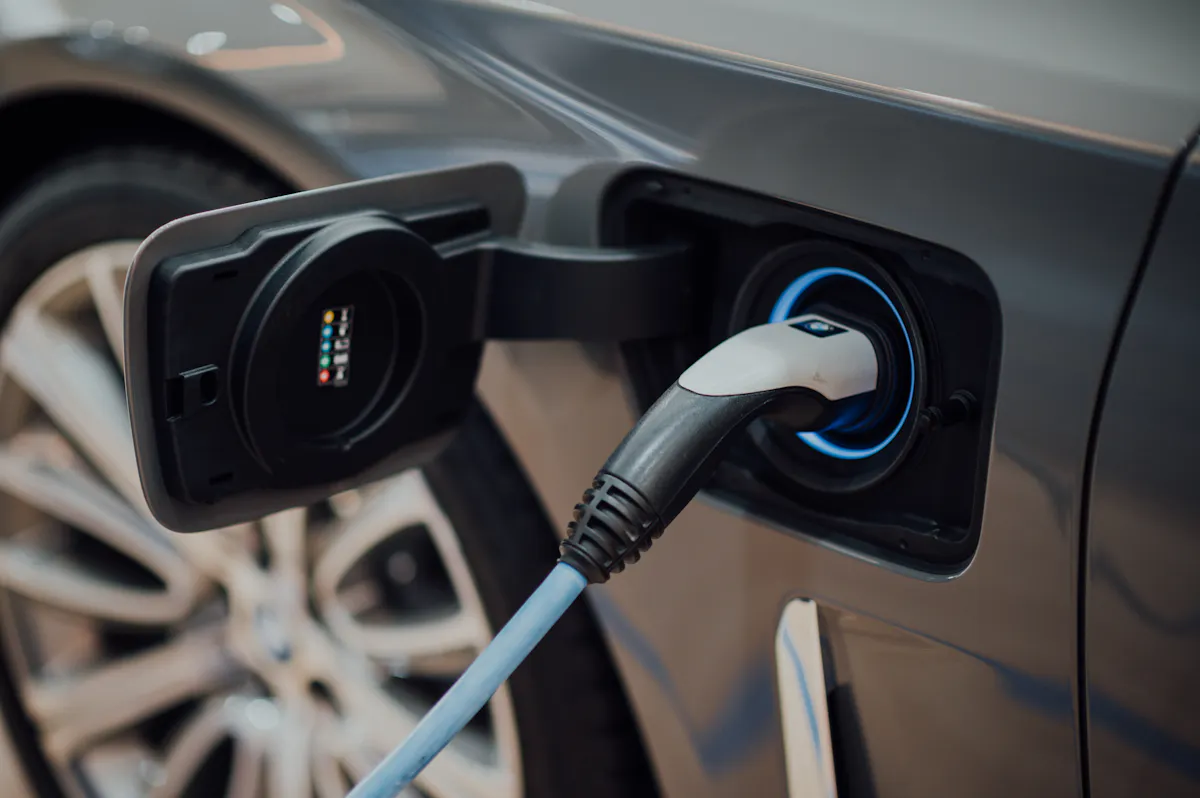
On an electric vehicle the traction battery accounts for a substantial part of what the car is worth. It sits in the floor pan, is rarely assessable from outside after an impact – and is regularly not looked at all in the first damage estimate.
A rear-end shunt, contact with a kerb, an obstacle driven over: what would be panel damage on a combustion car can, on an electric vehicle, affect the battery protection tray or individual cell modules. From outside there is usually nothing to see.
The consequences appear only later – as falling range, as a fault message, in the worst case as a thermal event. If the damage is not recorded in the report, it is practically unenforceable once the claim has been settled.
Then there is the value: an electric vehicle with documented battery damage loses market value dramatically, even where the battery has been replaced. The diminished value is correspondingly higher than on a comparable combustion car.
The SoH analysis shows how much usable capacity the battery still has relative to new – a figure that directly affects what the vehicle is worth.
The battery housing, the protection tray and the mounting points are checked for deformation, cracks and points of ingress.
Entries in the battery management system point to cell deviations, temperature events and insulation faults.
High-voltage vehicles require a separate qualification – work on high-voltage systems is safety-critical and cannot be done in passing.
We are qualified for work on electric and hybrid vehicles and we document the condition of the traction battery, including a state-of-health analysis. That is not an optional extra but, on an electric vehicle, part of a complete appraisal.

Replacing a battery runs, depending on the model, into the high four- or the five-figure range. An electric vehicle therefore slips into economic total loss quickly – and insurers correspondingly examine closely whether the damage really was caused by the collision.
Only documentation answers that: recording condition, measured values and the fault memory promptly lets you show later that the deviation came from the collision and not from age.
So for drivers of a Tesla, a Porsche Taycan, the ID models and comparable vehicles: insist that the battery is expressly dealt with in the report – even where the damage looks harmless at first.

Certified for high-voltage vehicles – including a state-of-health analysis of the traction battery.
Head office in Schramberg-Sulgen, branch office in Rottweil. For the damage inspection we come to you in any case – on site, at the workshop or at your home.

We only use storage that is technically necessary. External content – Google Maps, Instagram and the review seal – is loaded only once you have agreed. You can change this at any time in the footer.