
The age of the vehicle
The younger the car, the higher the diminished value. On very old vehicles it can fall away entirely.

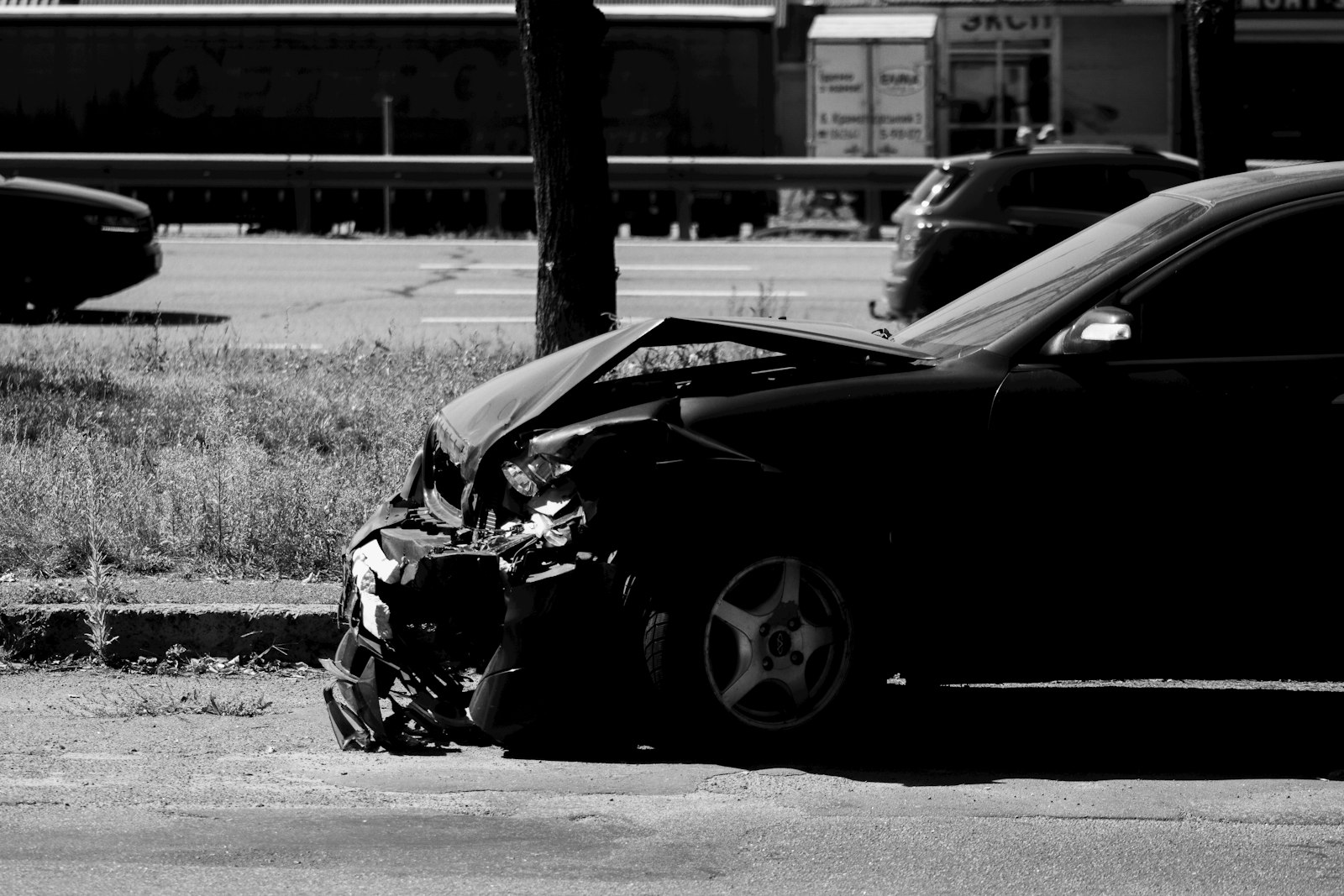
Even a properly repaired vehicle is worth less on the market than it was before the collision – simply because it is now a car with accident history. That loss in value is a claim for damages in its own right. And it is one of the items most often quietly dropped when there is no appraisal.
Merkantile Wertminderung is the amount by which a vehicle, even after a complete and proper repair, still fetches less than a comparable vehicle with no accident history. The reason lies not in the engineering but in the market: buyers distrust cars that have been in an accident and pay less for them.
This has to be distinguished from technical diminished value, which applies where an actual defect remains after the repair – distortion that cannot be fully corrected, say, or a visible difference in colour. In practice, on modern vehicles the merkantile form clearly predominates.
The claim exists regardless of whether you actually sell the vehicle. The loss lies in the reduced asset value itself – whether and when you realise it is your own affair.
The younger the car, the higher the diminished value. On very old vehicles it can fall away entirely.
Low mileage pushes it up, because the market here reacts particularly sensitively to previous damage.
What decides it is whether load-bearing parts were affected. Damage confined to bolt-on panels barely reduces the value.
There is no formula prescribed by law. In appraisal practice several recognised methods have established themselves, and they are combined according to the vehicle and the damage pattern.
Among the common ones are the Ruhkopf/Sahm method, the market relevance and factor model (MFM) and the Halbgewachs calculation. Which method is appropriate depends on the individual case – on luxury vehicles and on classics, standard formulas regularly produce figures that are far too low.
In the report the chosen method is named and the amount derived so it can be followed. That is precisely what makes the item enforceable against the insurer.

Diminished value is a convenient point of attack for insurers: it is open to arithmetical challenge because no method is prescribed by law. Without an appraisal it is frequently not applied at all, and with a brief review report it is cut to a fraction.
A clean derivation is the answer to that. Where the report sets out which method was chosen and why, and how the input figures are made up, the reduction becomes considerably harder to justify – in court if it comes to that.
A second point: diminished value only becomes relevant where the vehicle is actually repaired. In an economic total loss it is absorbed into the replacement value and is not reimbursed on top.

In the report we set out the diminished value so it can be followed – so that the item does not quietly disappear.
Head office in Schramberg-Sulgen, branch office in Rottweil. For the damage inspection we come to you in any case – on site, at the workshop or at your home.

We only use storage that is technically necessary. External content – Google Maps, Instagram and the review seal – is loaded only once you have agreed. You can change this at any time in the footer.