100 % FREE OF CHARGE FOR YOU!
REPORT A CLAIM!

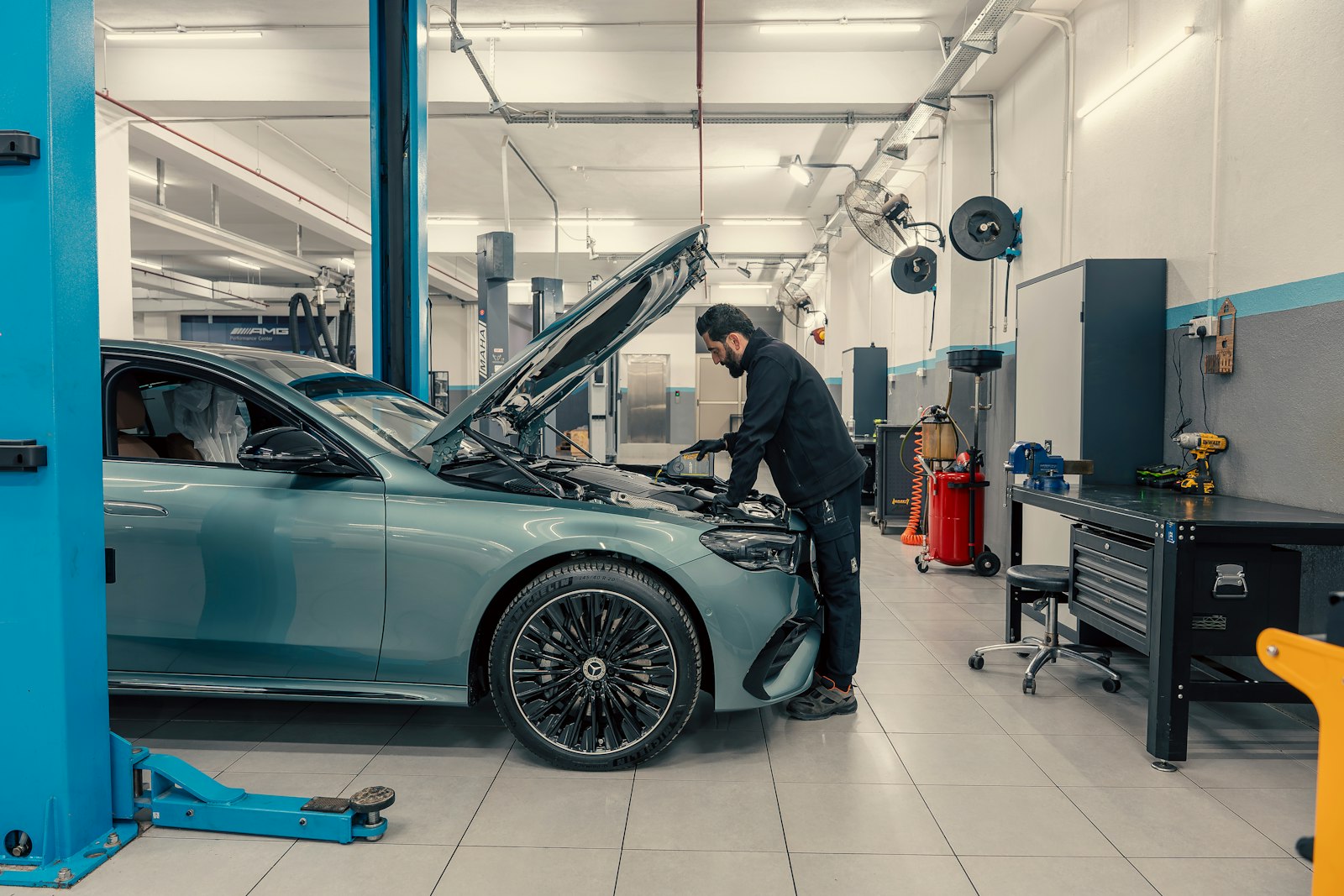
An overview of the work that goes into a well-organised fleet – from procuring vehicles through ongoing cost control to administration. We are happy to answer questions directly by telephone or on WhatsApp.
Fleet management brings together the work surrounding a business's company vehicles – from choosing new ones through ongoing cost control to handling damage. The point is that you can concentrate on your core business while contracts, deadlines and vehicles stay in view.
Alongside this we already offer two specific services around company vehicles today: the lease takeover when a vehicle changes, and the lease return with a condition inspection at the end of the term – both documented so they hold up in court.
This overview sets out the work that belongs to well-organised fleet management. For businesses in the Black Forest with their own fleet we are currently building out the remainder of the offering – do speak to us directly, and we will tell you honestly where we can already help you concretely today.
In the end this is not about vehicles but about what the fleet has been costing you: time, attention and an uneasy feeling about deadlines left open.
Calls to the workshop, the lessor and the insurer take up hours that are missing elsewhere. Those hours come back to you.
When the records are filed without gaps, the question of keeper liability loses its sting.
Instead of estimating what a vehicle costs, you see it in black and white – vehicle by vehicle.
One named contact who knows your fleet – instead of shifting responsibilities and telephone queues.
The difference shows less in a number than in daily life – in who picks up the phone when something comes up.
The leasing instalment is only part of the truth. The professional term is total cost of ownership across the whole period of use – from acquisition through operation to disposal. These are the items that belong to it:
One of the largest cost blocks there is, varying considerably by vehicle type and market conditions – yet it never arrives as an invoice.
The purchase price or leasing instalment together with interest and the residual value calculated for the end of the term.
The item that varies most with actual mileage – and differs markedly from vehicle to vehicle.
Predictable workshop costs that look small individually and add up across the year and across the fleet.
Fixed costs that arise whether a vehicle is used heavily or mostly stands still.
The working time that goes internally into organising, telephoning and coordinating. It appears on no invoice – and is therefore regularly underestimated.
What really drives cost is rarely what is obvious. Unplanned downtime, consequential damage and the effort of organising it all frequently weigh more heavily in practice than the monthly instalment that gets negotiated first.
As soon as you make a vehicle available to an employee, you carry the keeper's responsibility under German law – regardless of who is at the wheel. These duties recur regularly:
Please note: This overview is a first orientation and is no substitute for legal advice. The duties arise among other sources from the German Occupational Safety Act, the accident prevention regulations and the Road Traffic Act; in an individual case different intervals may apply.
Four steps from the first stocktake to ongoing support – without you having to reorganise your business.
We build an overview together: which vehicles are in use, which contracts are running, which records exist?
Where do the costs arise, which documents are missing, where does the process snag? You get an honest assessment – including when there is little to do.
We take on the agreed tasks, bring contracts and deadlines into a structure and set up fixed procedures for claims.
Deadlines, costs and damage stay permanently in view. You have one named contact instead of shifting responsibilities.
A fleet usually grows alongside the business almost by accident. At some point it costs more time and nerves than was ever budgeted for – without anyone being able to say precisely where the time actually goes.
Leasing contracts, invoices and registration documents lie scattered across different folders, mailboxes and glove compartments.
The roadworthiness test, the UVV inspection or an expiring contract are only noticed once time is already short.
Fleet tasks end up incidentally in accounts, in the office, or on the boss's desk in the evening.
What a single vehicle actually costs per year can hardly be worked out from the scattered invoices.
The workshop, the insurer and the appraiser each have to be coordinated separately – and meanwhile the vehicle stands idle.
Whether every keeper's duty has really been met and demonstrably documented is something nobody can say for certain when it matters.
If any of that sounds familiar, you are in the same position as many businesses. These are exactly the points fleet management addresses – not with another piece of software, but by someone actually taking the work on.
Every company vehicle passes through the same five phases – from the first question of what is needed to the eventual return. Fleet management accompanies each one of them, so that nothing is lost at the transitions.
Which type of vehicle suits the job? Mileage, payload and specification are settled in advance.
Comparing offers, checking terms, ordering – and handing the vehicle over with a written record.
Costs, dates and drivers' duties carry on – this is where most of the administrative effort arises.
Recording the damage, the workshop, the insurer and, where needed, the appraisal all mesh together.
At the end of the term, the documented condition decides what is charged afterwards.
In our experience the expensive surprises do not arise within these phases but at the transitions: when a vehicle is handed over without its condition being recorded, or when after damage nobody reconciles the invoice against the approved scope of repair.

A free first conversation establishes in about twenty minutes whether and how we can help you. Simply call or write to us.
We come to you – travel is free of charge throughout our service area and an inspection is often possible the same day.
Looking for fleet management near you? We work in Rottweil, Schramberg, Oberndorf am Neckar, Sulz am Neckar and the whole district of Rottweil – and in the neighbouring districts of Tuttlingen, Freudenstadt, Zollernalb and Schwarzwald-Baar.
Straight to your town: Rottweil, Schramberg, Oberndorf am Neckar, Sulz am Neckar, Deißlingen, Zimmern ob Rottweil or the overview of all locations (in German).
Head office in Schramberg-Sulgen, branch office in Rottweil. For the damage inspection we come to you in any case – on site, at the workshop or at your home.

We only use storage that is technically necessary. External content – Google Maps, Instagram and the review seal – is loaded only once you have agreed. You can change this at any time in the footer.